India's Assertive Diplomacy at the SCO Defence Ministers' Meet 2026: A Deep Dive into Regional Security and Multilateralism
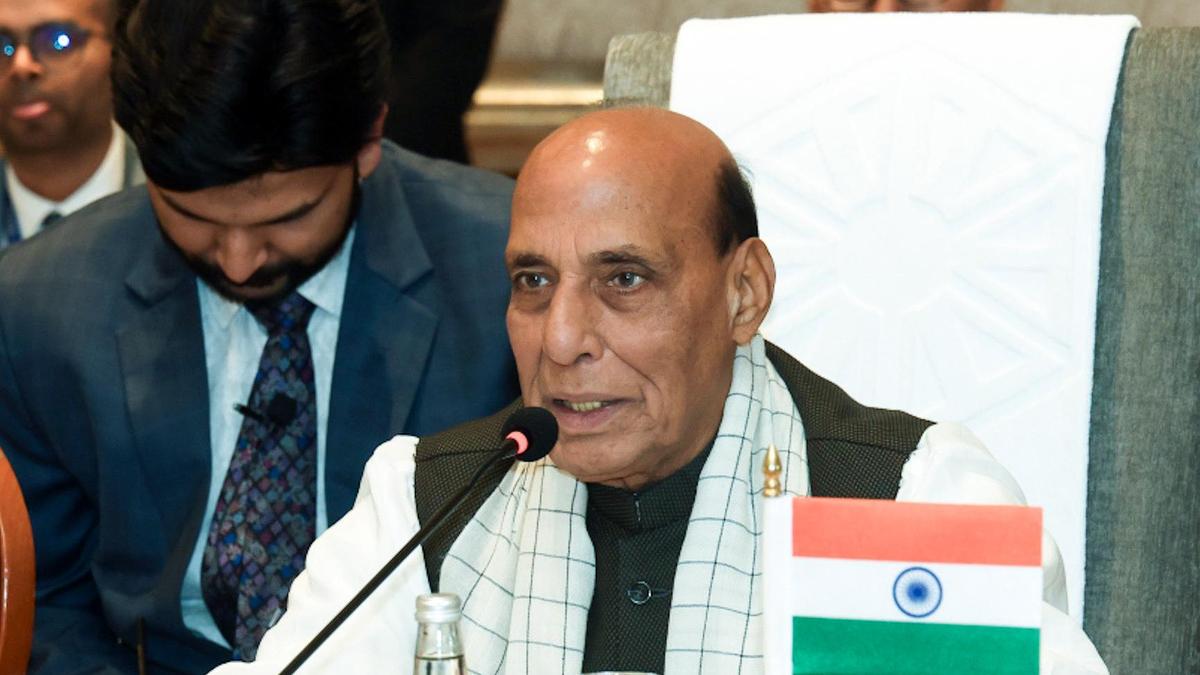
Defence Minister Rajnath Singh is at the forefront of India's strategic engagement in Eurasia, participating in the Shanghai Cooperation Organisation (SCO) Defence Ministers' Meeting held in Bishkek, Kyrgyzstan, on April 28, 2026. This high-level gathering serves as a critical platform for member states to deliberate on pressing regional and global security challenges, reinforce counter-terrorism efforts, and bolster defence collaboration amidst an evolving geopolitical landscape.
Key Highlights of the 2026 SCO Defence Ministers' Meeting
Rajnath Singh arrived in Bishkek on Monday, April 27, 2026, leading a high-level Indian delegation for the crucial talks. The agenda for the meeting is comprehensive, encompassing discussions on international peace, robust counter-terrorism strategies, and enhanced defence cooperation among the SCO member states. A significant backdrop to this year's meeting is the ongoing geopolitical turmoil, particularly the situation in West Asia. Member countries are expected to explore collective measures to mitigate the impact of such conflicts on regional stability and security.
India's Defence Minister articulated a firm stance, emphasizing India's unwavering commitment to global peace and stability. He unequivocally reiterated India's consistent policy of "zero tolerance for terrorism and extremism" in the face of escalating security threats. Singh stressed the collective responsibility of SCO member nations in maintaining global equilibrium, advocating for a rule-based international system driven by dialogue and diplomacy, rather than force. He invoked Mahatma Gandhi's ethical framework, stating, "We should continue to follow the path of dialogue and diplomacy and not of unrelenting force. We should not allow it to become an era of violence and war, but an era of peace and prosperity."
Furthermore, Singh highlighted that "terrorism epicentres are no longer safe from action" and called for global unity to eliminate terrorism, separatism, and extremism. He made it clear that nations supporting or sheltering terrorists must face consequences and warned against state-sponsored cross-border terrorism, emphasizing the need for no double standards in matters of national security.
On the sidelines of the main meeting, Defence Minister Singh is scheduled to hold several bilateral discussions with his counterparts from participating nations. These bilateral engagements, particularly with countries like Belarus, Kazakhstan, and Kyrgyzstan, aim to further strengthen defence cooperation and expand strategic ties. Such interactions are vital for fostering closer military-to-military relations and exploring new avenues for collaboration, as evidenced by recent diplomatic efforts like the fourth meeting of the India-Kyrgyzstan Joint Working Group on defence cooperation held earlier this month.
Understanding the Shanghai Cooperation Organisation (SCO) for UPSC
The Shanghai Cooperation Organisation (SCO) is a critical intergovernmental organization that plays a significant role in Eurasian political, economic, and security affairs. For UPSC aspirants, understanding its genesis, objectives, structure, and India's role within it is crucial for International Relations (GS-II) and Current Affairs.
Genesis and Evolution
The SCO originated from the "Shanghai Five" mechanism, formed in 1996. This initial grouping comprised China, Russia, Kazakhstan, Kyrgyzstan, and Tajikistan, primarily focusing on resolving border disputes and fostering security cooperation. In June 2001, with the inclusion of Uzbekistan, the group formally evolved into the Shanghai Cooperation Organisation, with a broader mandate for political and economic cooperation. The SCO Charter, the organization's constitutional document, was adopted in 2002 and came into effect on September 19, 2003.
Membership and Structure
The SCO has expanded significantly over the years, transforming into a powerful Eurasian partnership. As of 2024, it comprises ten full member states: India, Russia, China, Kazakhstan, Kyrgyzstan, Pakistan, Tajikistan, Uzbekistan, Iran, and Belarus. India and Pakistan joined as full members in 2017, marking a significant expansion. Iran became a full member in 2023, followed by Belarus in 2024.
The organization operates on the "Shanghai Spirit," which emphasizes mutual trust, mutual benefit, equality, respect for cultural diversity, and the pursuit of common development. The SCO has two permanent bodies:
- SCO Secretariat: Located in Beijing, China, it provides organizational and technical support.
- Regional Anti-Terrorist Structure (RATS): Headquartered in Tashkent, Uzbekistan, RATS is crucial for coordinating efforts against terrorism, separatism, and extremism.
The supreme decision-making body of the SCO is the Council of Heads of State, which holds annual summits. The Council of Heads of Government is the second-highest council, discussing multilateral cooperation and approving the budget.
Objectives and Core Mandate
The broad objectives of the SCO aim to address both traditional and non-traditional security threats while fostering economic and cultural cooperation. Key objectives include:
- Strengthening Mutual Trust and Good-Neighbourliness: Fostering confidence and cooperation among member states to build a stable and harmonious regional environment.
- Combating the "Three Evils": A primary focus is on jointly combating terrorism, separatism, and extremism. RATS plays a pivotal role in this.
- Promoting Effective Cooperation: Enhancing collaboration across diverse fields such as politics, trade, economy, research and technology, culture, energy, transport, tourism, and environmental protection.
- Maintaining Regional Peace and Stability: Ensuring collective efforts to safeguard peace, security, and stability, particularly in Central Asia.
- Establishing a Democratic and Rational International Order: Working towards a new international political and economic order that is non-aligned, non-confrontational, and not targeted against other countries.
India's Strategic Interests and Significance within the SCO
India's full membership in the SCO in 2017 marked a strategic move to deepen its engagement in Eurasia. The organization offers India significant opportunities to advance its geopolitical goals, enhance national security, and strengthen its economic outreach.
Counter-Terrorism and Security
The SCO provides India with a crucial platform to voice its concerns about cross-border terrorism, extremism, and radicalization. India has consistently advocated for a strong, unified stance against terrorism, emphasizing zero tolerance and the need for decisive global action against state sponsors and safe havens for terrorists. The Regional Anti-Terrorist Structure (RATS) is particularly vital, enabling intelligence sharing, coordination of anti-terror drills (like SCO Peace Mission exercises), and the development of joint responses to security threats. India's firm stand, as seen in its refusal to sign a joint statement at the 2025 SCO Defence Ministers' meeting due to inadequate references to specific terror attacks, highlights its commitment to a principled approach in combating terrorism.
Energy Security
Central Asia and Russia are rich in hydrocarbon resources, which are critical for India's burgeoning energy needs. SCO membership allows India to strengthen energy cooperation, explore long-term partnerships in oil, gas, and renewables, and diversify its energy sources.
Connectivity with Central Asia
Given India's lack of direct land access to Central Asia due to geopolitical realities, the SCO facilitates dialogue on alternative connectivity projects. Initiatives such as the International North-South Transport Corridor (INSTC) and the Chabahar Port are crucial for enhancing India's trade and economic ties with Central Asian countries, bypassing traditional routes. India advocates for connectivity initiatives that respect sovereignty and territorial integrity, implicitly referencing concerns over projects like China's Belt and Road Initiative (BRI) passing through disputed territories.
Balancing China and Pakistan
The SCO offers India a multilateral setting to engage with both China and Pakistan, despite persistent bilateral tensions. This platform provides avenues for dialogue, crisis management, and promoting de-escalation, preventing complete isolation and keeping communication channels open. However, the challenges posed by China's dominance and Pakistan's presence, particularly on sensitive issues like terrorism, are evident, as seen in past diplomatic standoffs over joint statements.
Strategic Presence in Eurasia and Multipolar Diplomacy
Participation in SCO summits and activities helps India strengthen ties with Russia, Iran, and the Central Asian states, thereby enhancing its strategic footprint in Eurasia. This engagement aligns with India's foreign policy of promoting multipolar global governance and strategic autonomy. The SCO serves as a valuable diplomatic forum where India can build issue-based coalitions, test consensus, and project its independent voice on global matters, including advocating for a rules-based international order.
Challenges and Way Forward for India in SCO
Despite the opportunities, India faces several challenges within the SCO. The consensus-based decision-making process can lead to diplomatic deadlocks, especially when national interests, particularly those of China and Pakistan, diverge from India's. China's increasing influence, particularly through initiatives like the BRI which India has reservations about, and the presence of Pakistan, complicate India's engagement.
For India, navigating these complexities requires a policy of 'principled realism' and 'strategic autonomy.' This means actively participating in the SCO while safeguarding its national interests, maintaining independent positions on contentious issues, and focusing on areas of mutual benefit such as counter-terrorism, energy, and connectivity. India should continue to push for the institutionalization of robust anti-terrorism mechanisms within RATS and advocate for a clear, unambiguous definition of terrorism, devoid of political excuses.
Strengthening connectivity projects like INSTC and Chabahar, diversifying economic engagements, and leveraging its soft power through cultural and people-to-people exchanges can further embed India's presence in the Eurasian landscape. Ultimately, India's effective diplomacy within the SCO will depend on its ability to balance cooperation with assertion, ensuring that the forum contributes positively to regional peace and India's strategic goals.
Share
Practice Quiz
1 / 5
1.Which of the following statements about the Shanghai Cooperation Organisation (SCO) is/are correct? 1. The SCO was established in 1996 as the 'Shanghai Five'. 2. India became a full member of the SCO in 2017. 3. The Regional Anti-Terrorist Structure (RATS) is headquartered in Beijing. 4. The SCO's official languages are English and Russian.
1 and 2 only
2 only
1, 2 and 3 only
2 and 4 only